
Before the winter storms: how the loop gets ready
Trimming, pole inspections, spare transformers in every yard and a storm roster of crews: what Grid Operations does every autumn before the first big Pacific system arrives.
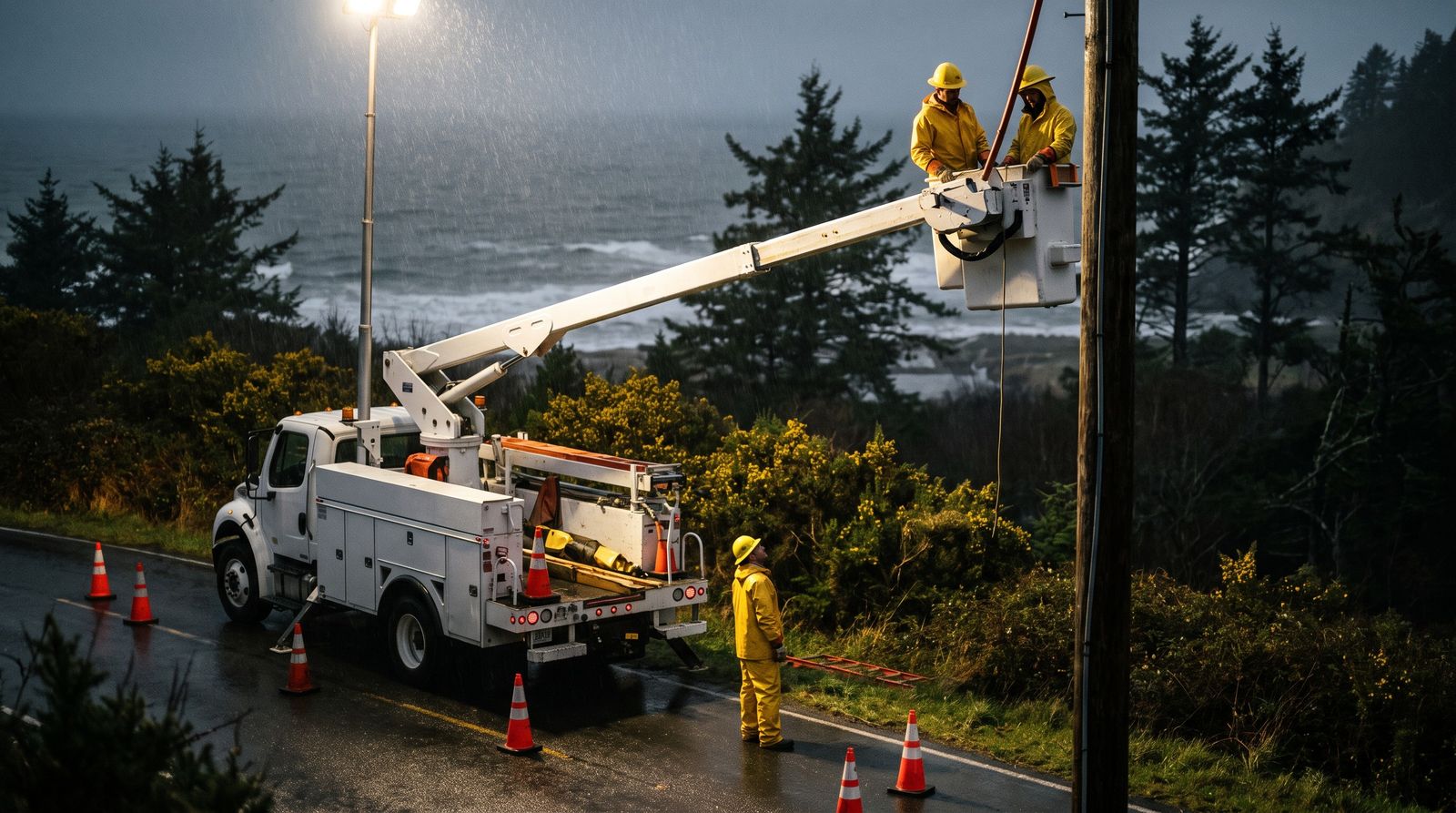
The South Coast's winter storms are not a surprise, and the loop is readied for them the same way every year. Tree crews work the right-of-way along Elk River Road, North Bank Road and Beach Loop through the autumn, where alder and spruce lean over the lines. Every pole in the loop is on a ten-year inspection cycle, and the ones found soft this year are replaced before the rains.
Each of the four substation yards holds a spare distribution transformer and a pallet of the fittings a crew runs through in a long night. The Gold Beach yard, the farthest from the station, carries two. A storm roster puts a line crew within forty minutes of every feeder, and the dispatcher's desk at the station is staffed around the clock through the season, as it is all year.
The plant itself is built for the weather. Cape Blanco sees some of the strongest wind on the coast, and the station's switchyard, its intake and its two units have ridden out every storm since the late 1980s without an interruption to the loop that lasted longer than the time it took to reclose a breaker.
If your power goes out in a storm, report it on the outage line, (696) 412-0511, or on the outage form. The clinic, the harbor, the city's water plant and the airport yard are restored first; after them, the feeder with the most customers out.
Questions about this notice go to the Communications & Community office, (696) 412-0540, community@oregonnuclear.com. All notices.
More notices
From the station
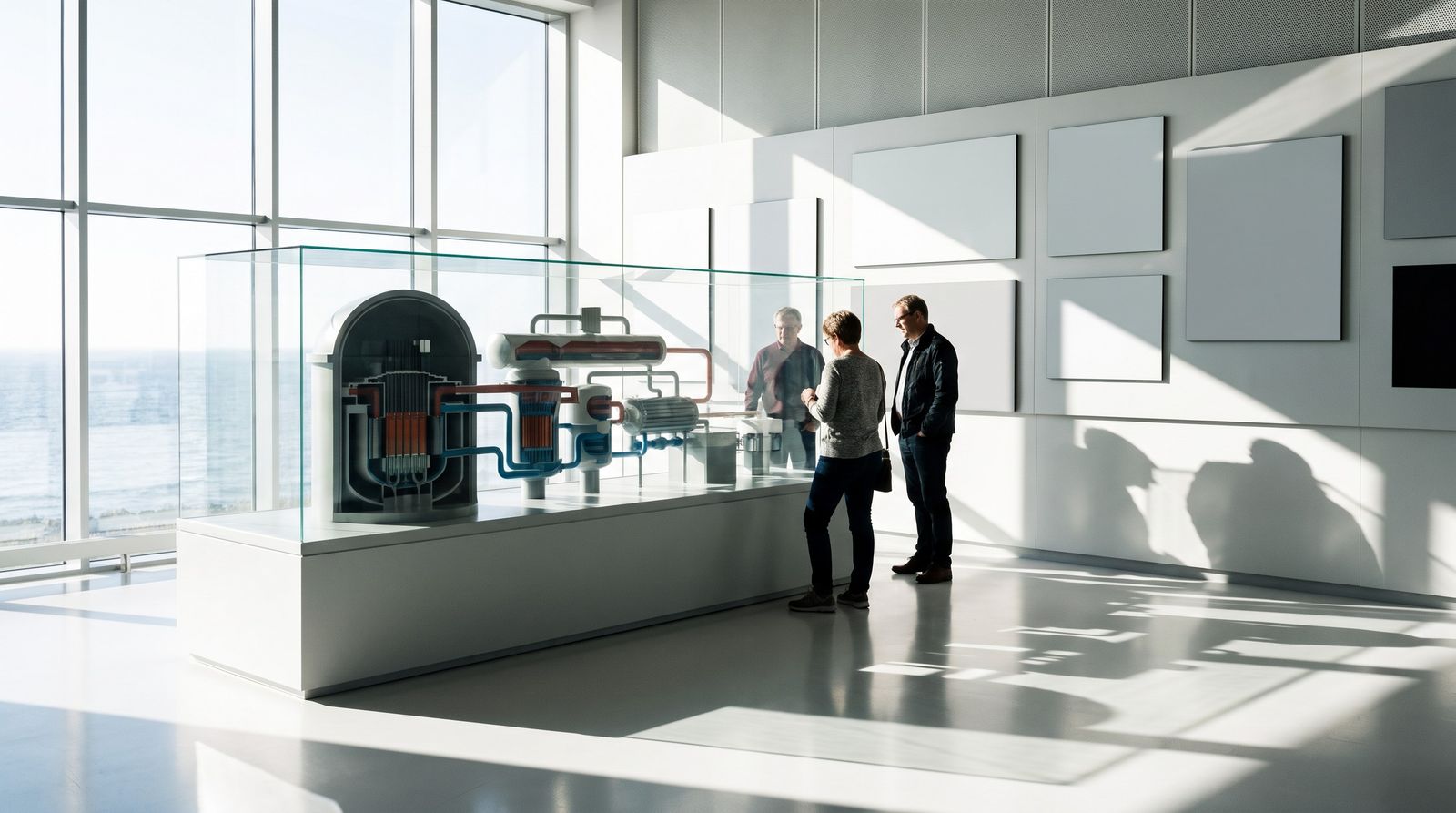
October open house at the visitor center
The visitor center opens its doors on a Saturday for the whole South Coast: the model control room, the fuel assembly mock-up, the estuary team's tanks and the line crew's bucket truck in the lot.
Read more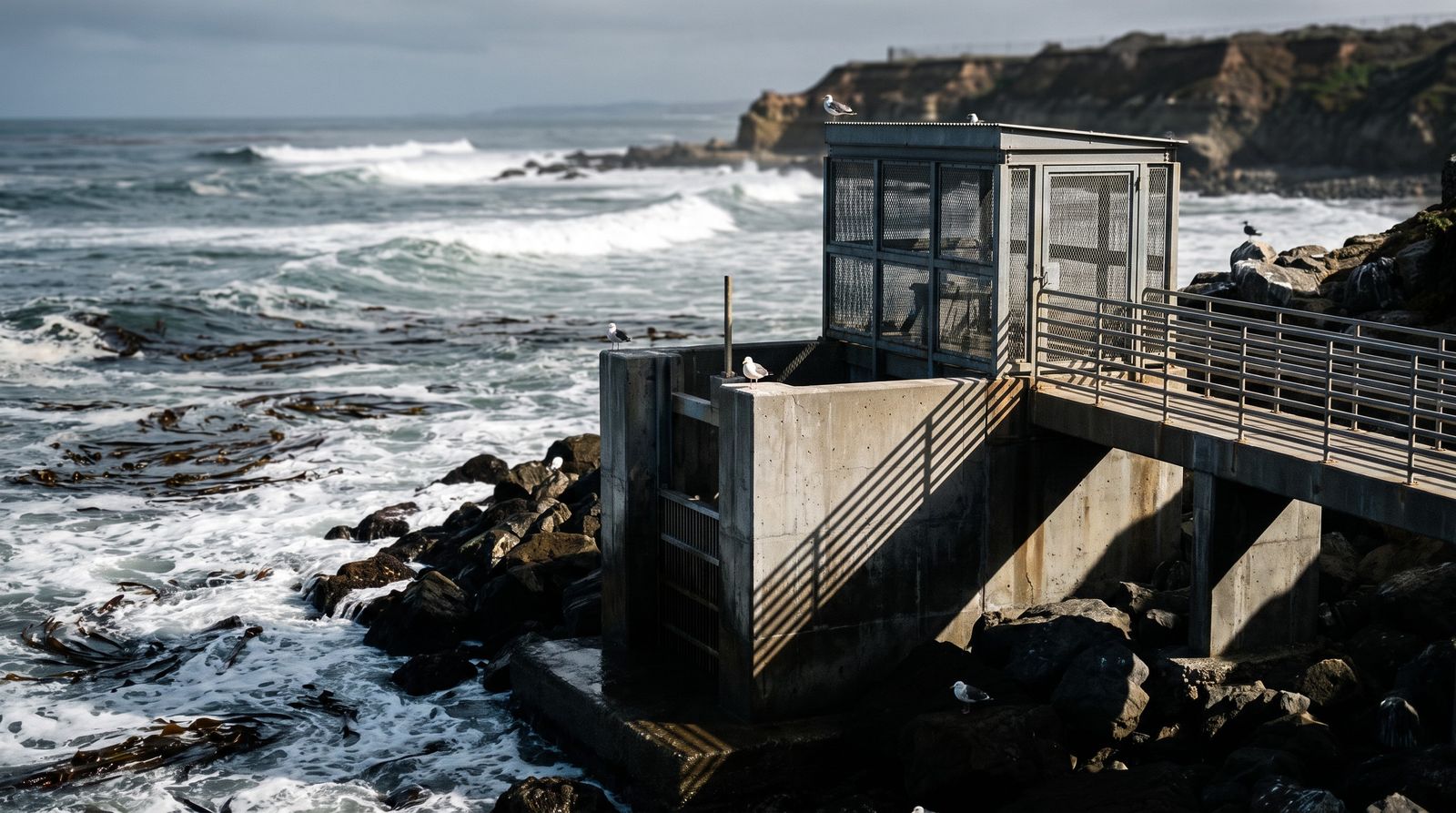
A late-summer kelp bloom on the intake screens
Warm water and a run of calm days sent more drift kelp than usual into the offshore intake. The traveling screens handled it, and every strand went back to the sea.
Read more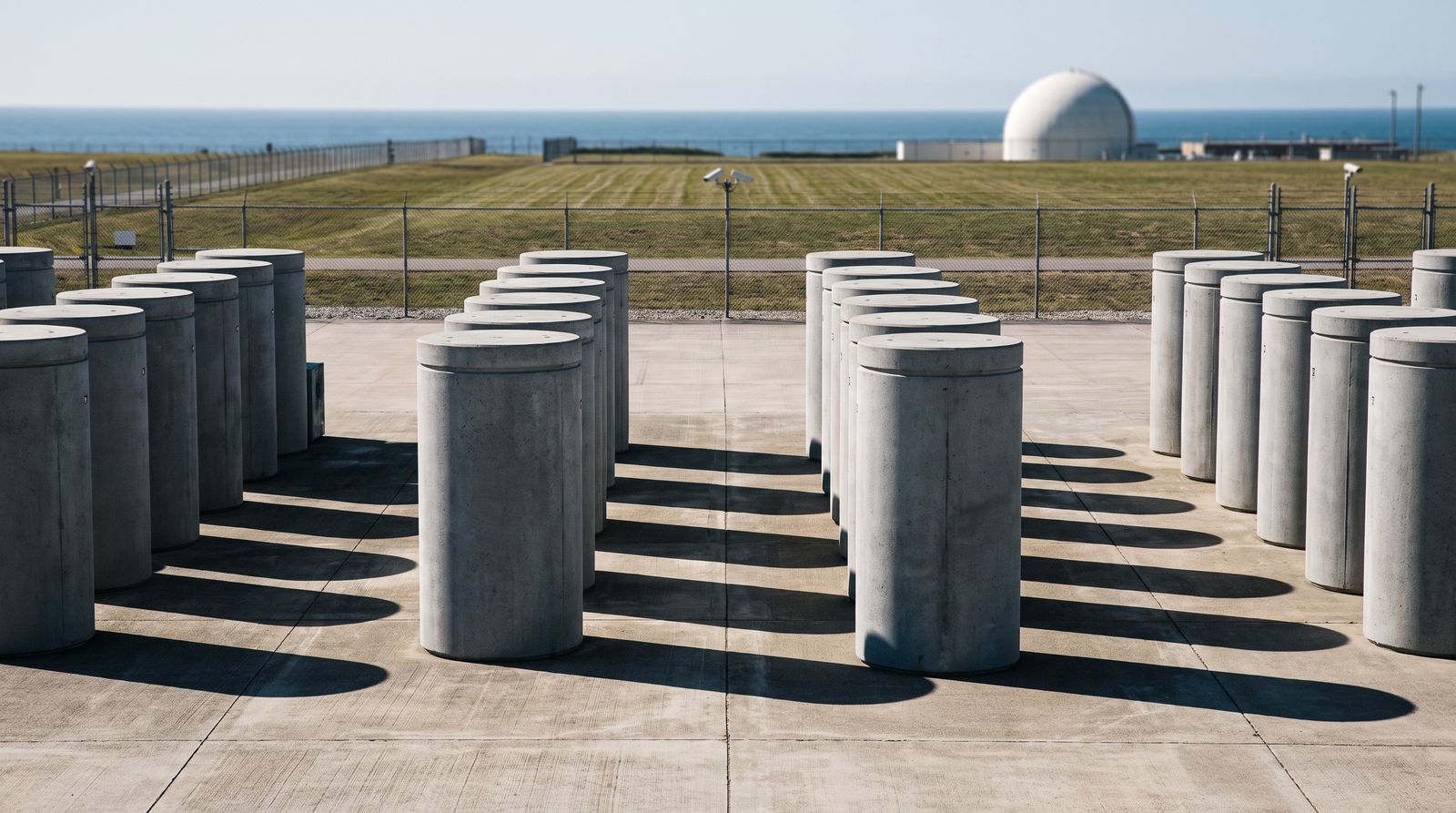
Four more casks on the pad
This summer's loading campaign moved the oldest used fuel from the Unit 1 pool into four steel-and-concrete casks. The pad now holds 28.
Read more