
Elk calving closes the lower meadow road
The Roosevelt elk herd that grazes the station's meadows calves in the alders below the bluff. The lower meadow road closes to vehicles until the calves are up and moving.
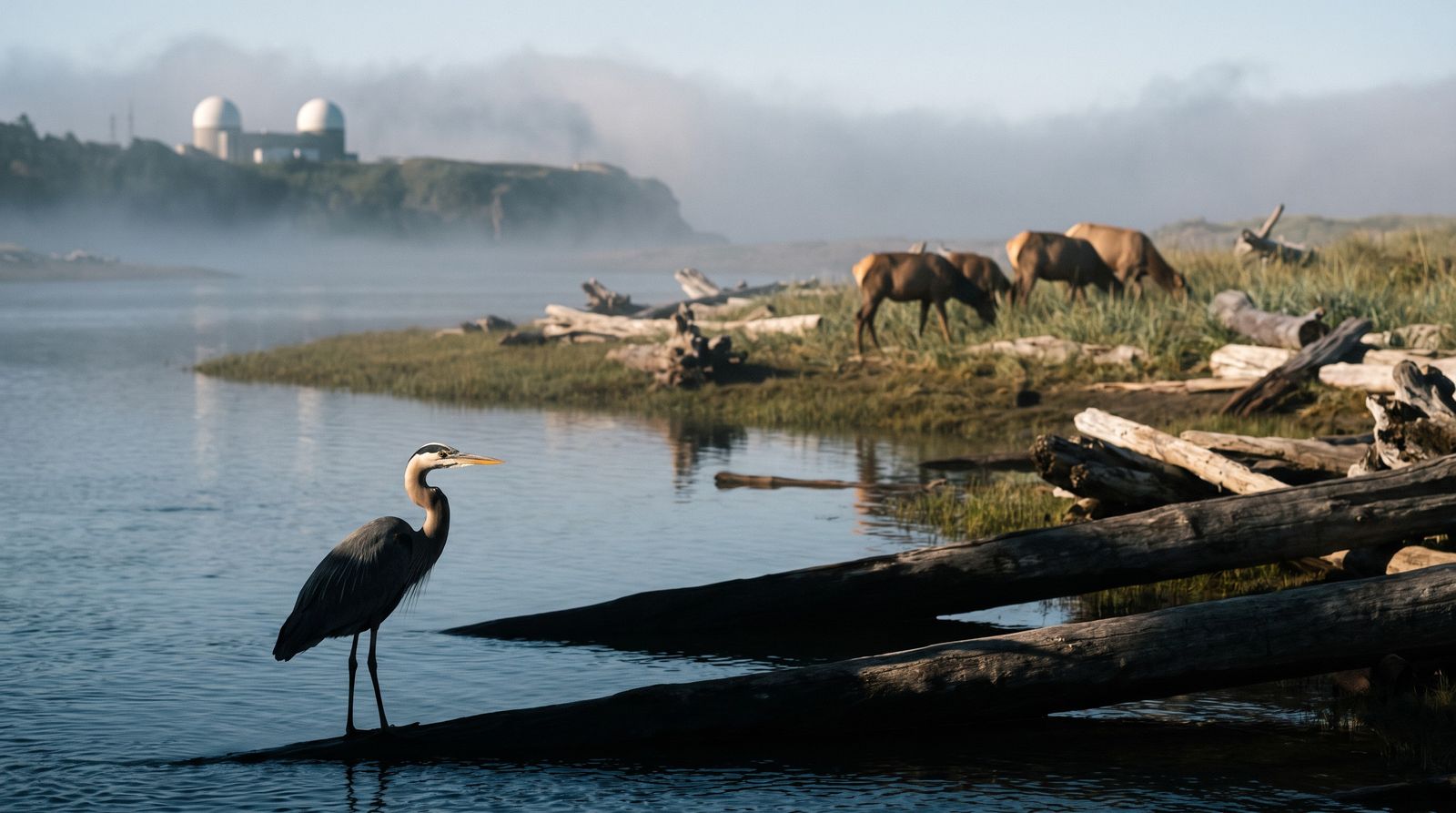
A herd of Roosevelt elk has grazed the meadows between the plant road and the Sixes River estuary for as long as there has been a plant here. Each spring the cows move into the alder thickets below the bluff to calve, and for about six weeks the station closes the lower meadow road to vehicles and asks walkers on the estuary trail to keep to the boardwalk.
The closure is coordinated with the state's wildlife biologists, who count the herd with us each year. The count has been steady or rising for a decade; the station's meadows are mowed late and never sprayed, and the fence line was moved years ago to leave the herd its route to the river.
The great blue herons that nest in the spruce above the estuary arrive about the same time. The estuary program page describes both, and the visitor center's binoculars are free to borrow.
Questions about this notice go to the Communications & Community office, (696) 412-0540, community@oregonnuclear.com. All notices.
More notices
From the station
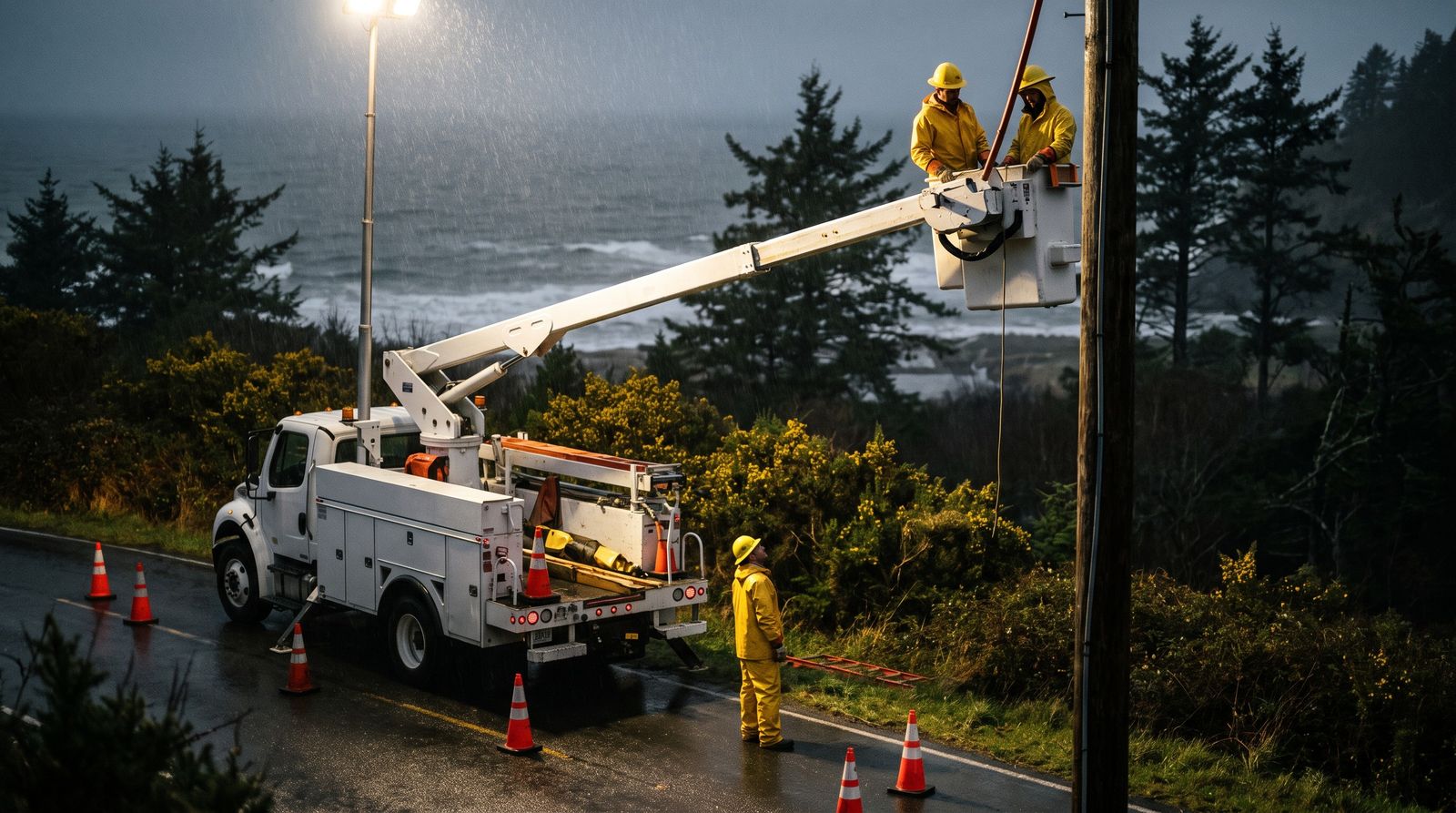
Before the winter storms: how the loop gets ready
Trimming, pole inspections, spare transformers in every yard and a storm roster of crews: what Grid Operations does every autumn before the first big Pacific system arrives.
Read more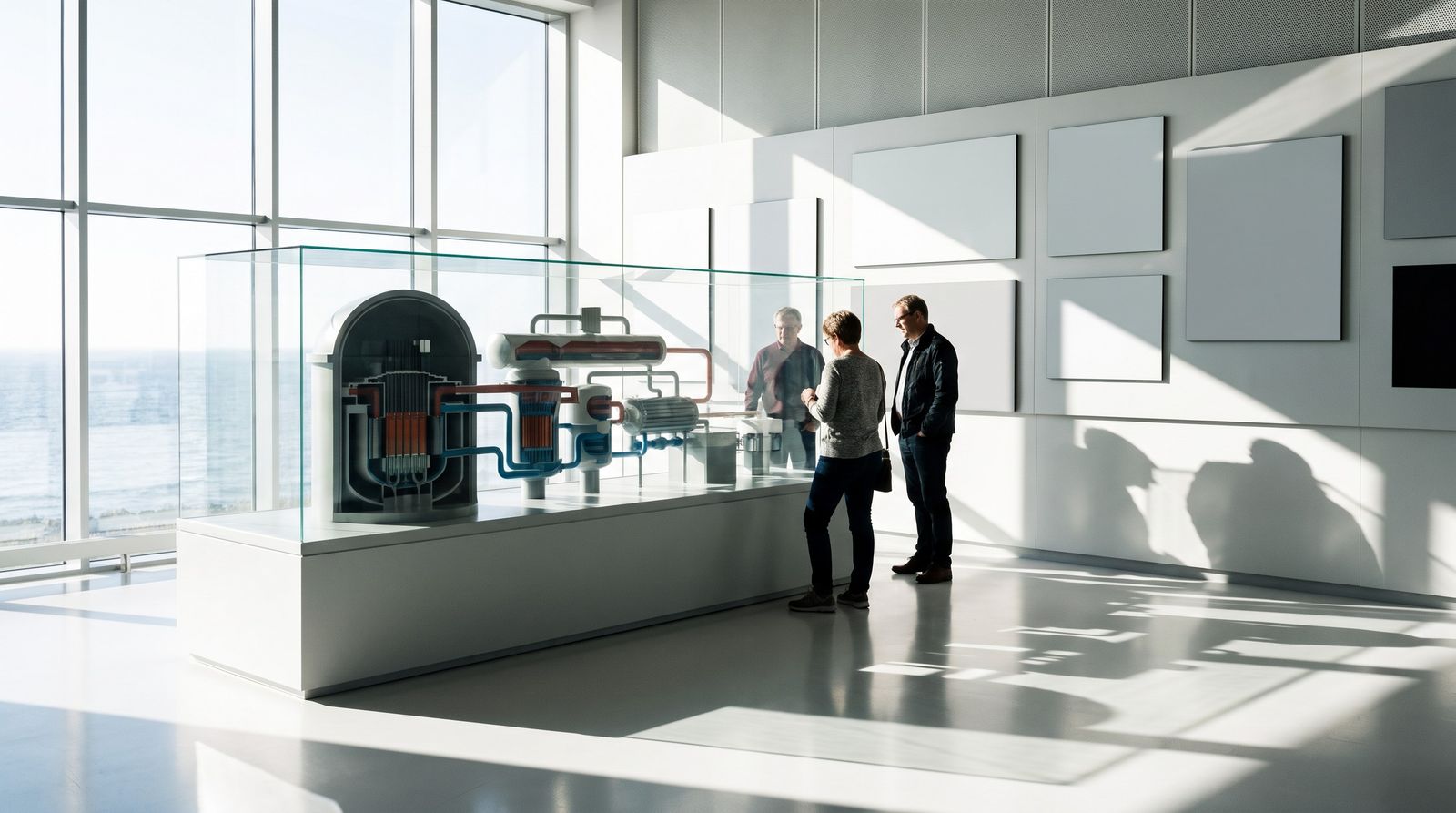
October open house at the visitor center
The visitor center opens its doors on a Saturday for the whole South Coast: the model control room, the fuel assembly mock-up, the estuary team's tanks and the line crew's bucket truck in the lot.
Read more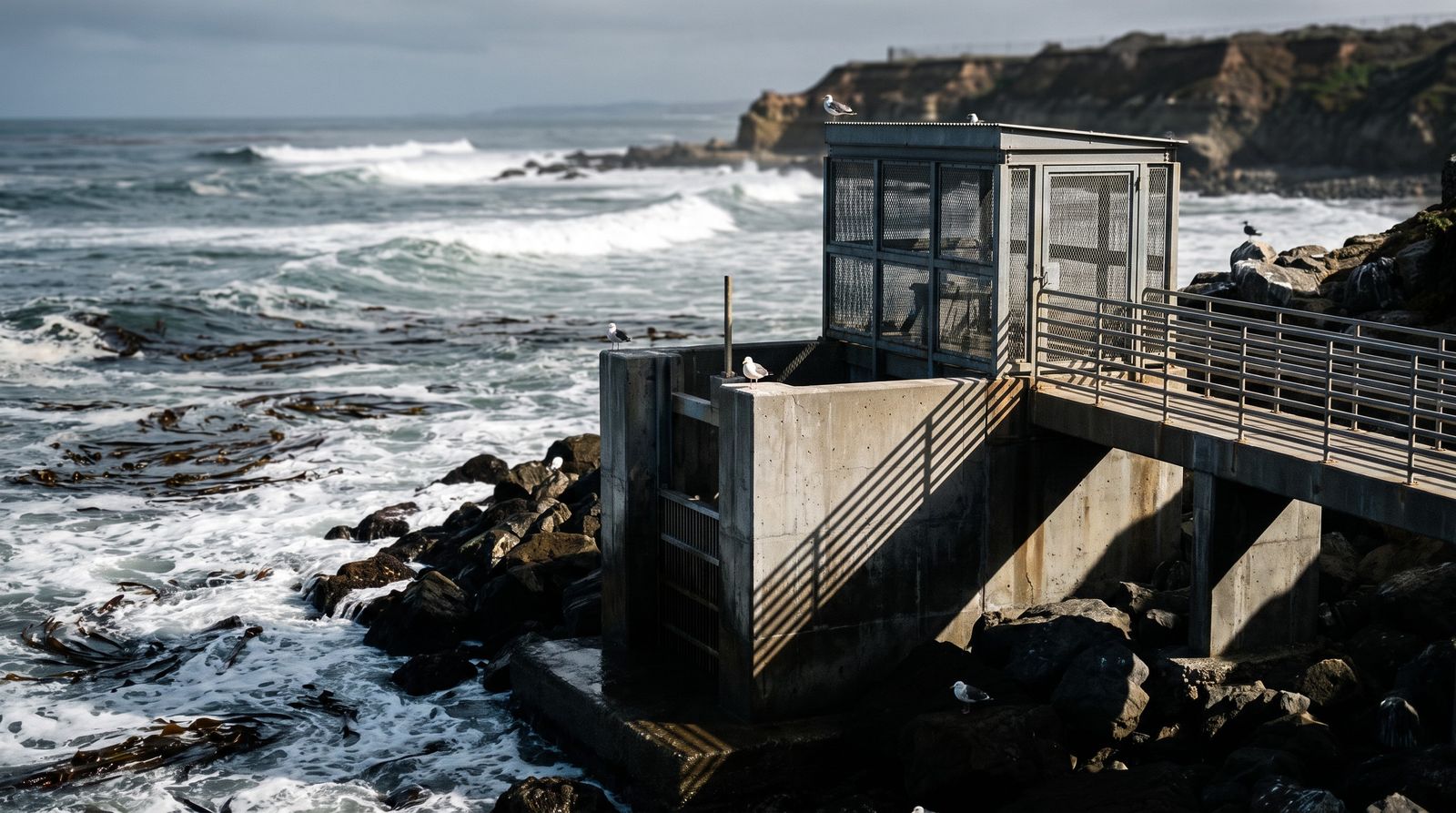
A late-summer kelp bloom on the intake screens
Warm water and a run of calm days sent more drift kelp than usual into the offshore intake. The traveling screens handled it, and every strand went back to the sea.
Read more